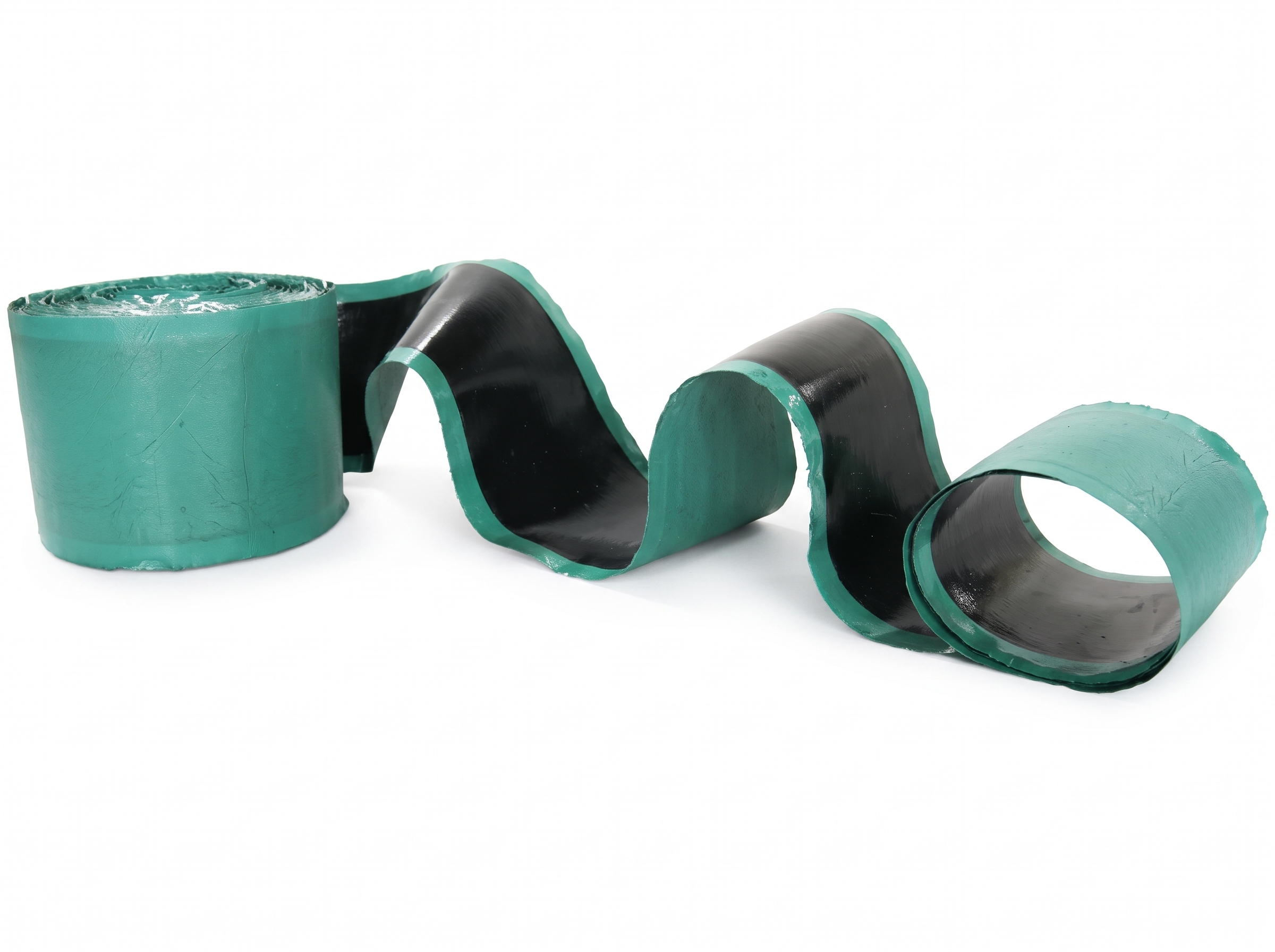
Cover Strips
Cover Strips
Cover strips are used in compatible conveyor belt splice and repair assemblies to help cover and protect prepared joint areas, providing an additional rubber layer where specified by the splicing procedure.

No matching results found.
Try a different product, solution, or keyword.Explore conveyor belt splicing materials for belt joining, vulcanization and repair applications across industrial conveyor systems.

Conveyor belt splicing materials play an important role in preparing, bonding, and protecting belt joints during compatible vulcanization and repair procedures. Suitable material selection helps support the integrity of the completed splice.
CEC offers cover strips, uncured rubber and vulcanizing cements for conveyor belt splicing and maintenance applications. Material selection should account for belt construction, the splicing method and manufacturer compatibility requirements.
Contact Us
Cover strips are used in compatible conveyor belt splice and repair assemblies to help cover and protect prepared joint areas, providing an additional rubber layer where specified by the splicing procedure.
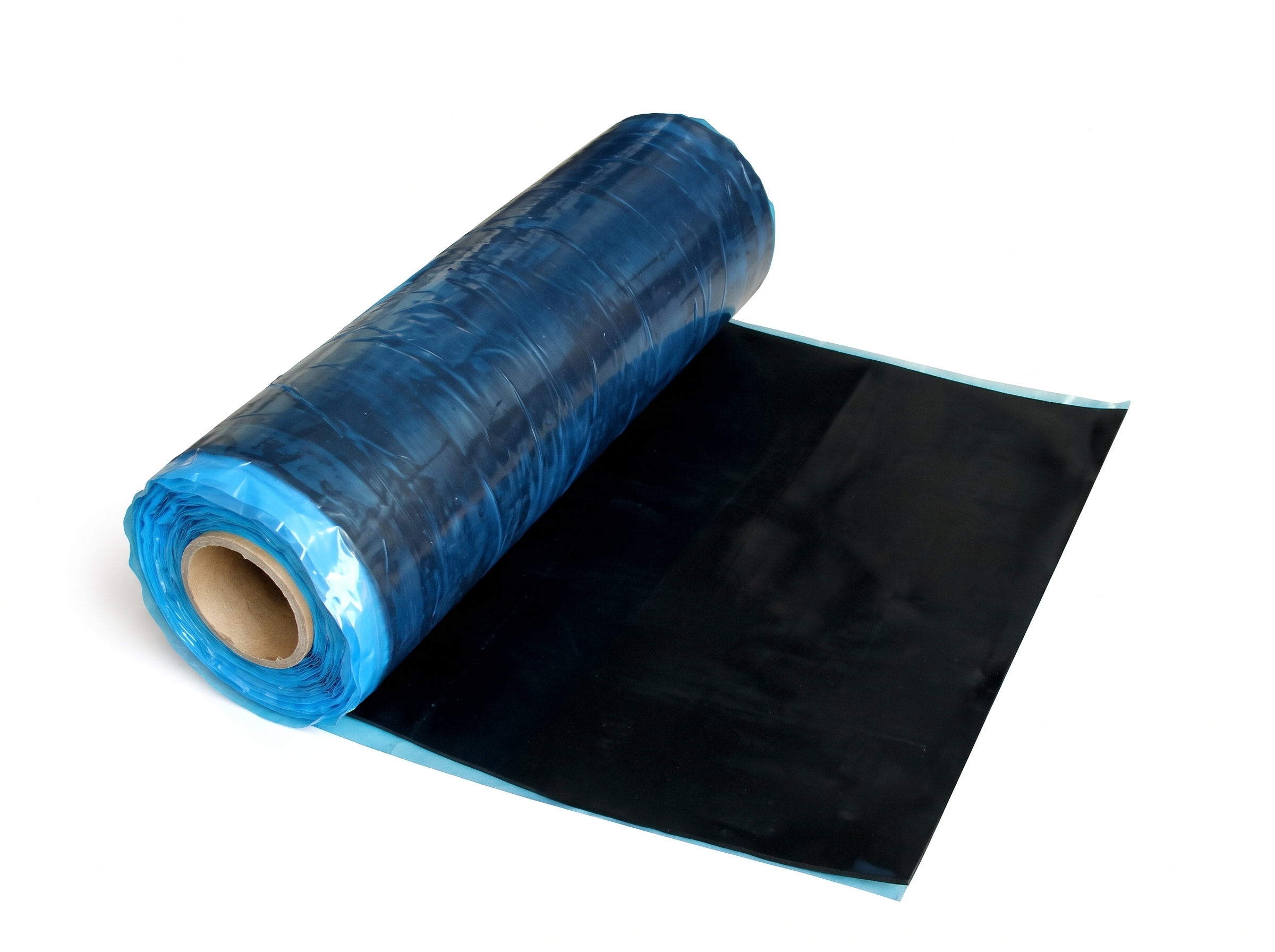
Uncured rubber compounds are used in compatible hot-vulcanizing processes to build up or bond prepared belt splice and repair areas under controlled processing conditions.
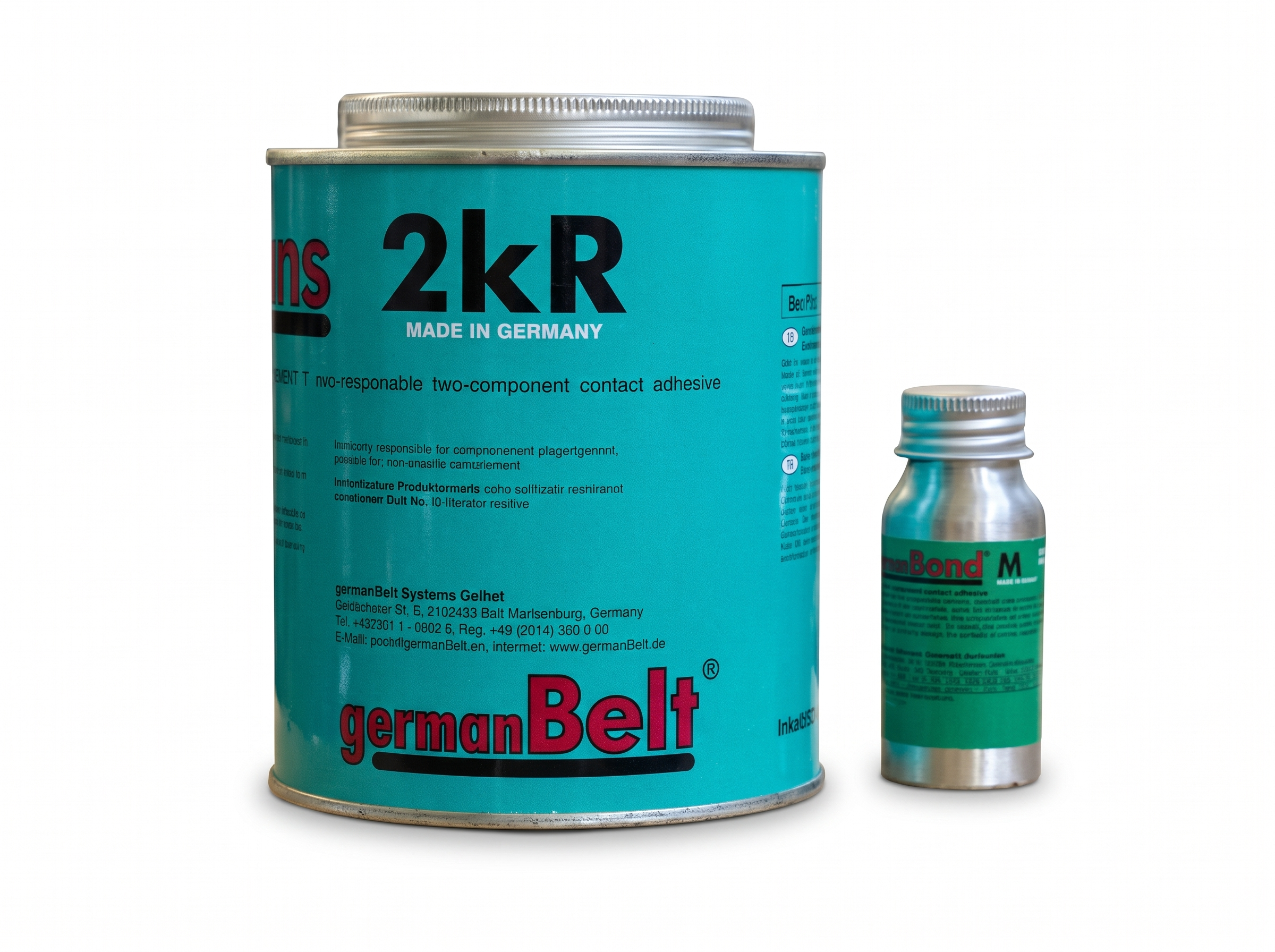
Vulcanizing cements are applied during specified belt preparation and splicing procedures to support bonding between compatible materials according to the selected vulcanization system.

Rubber repair patches for localized conveyor belt damage, available in standard and fabric-reinforced options to restore belt cover protection.
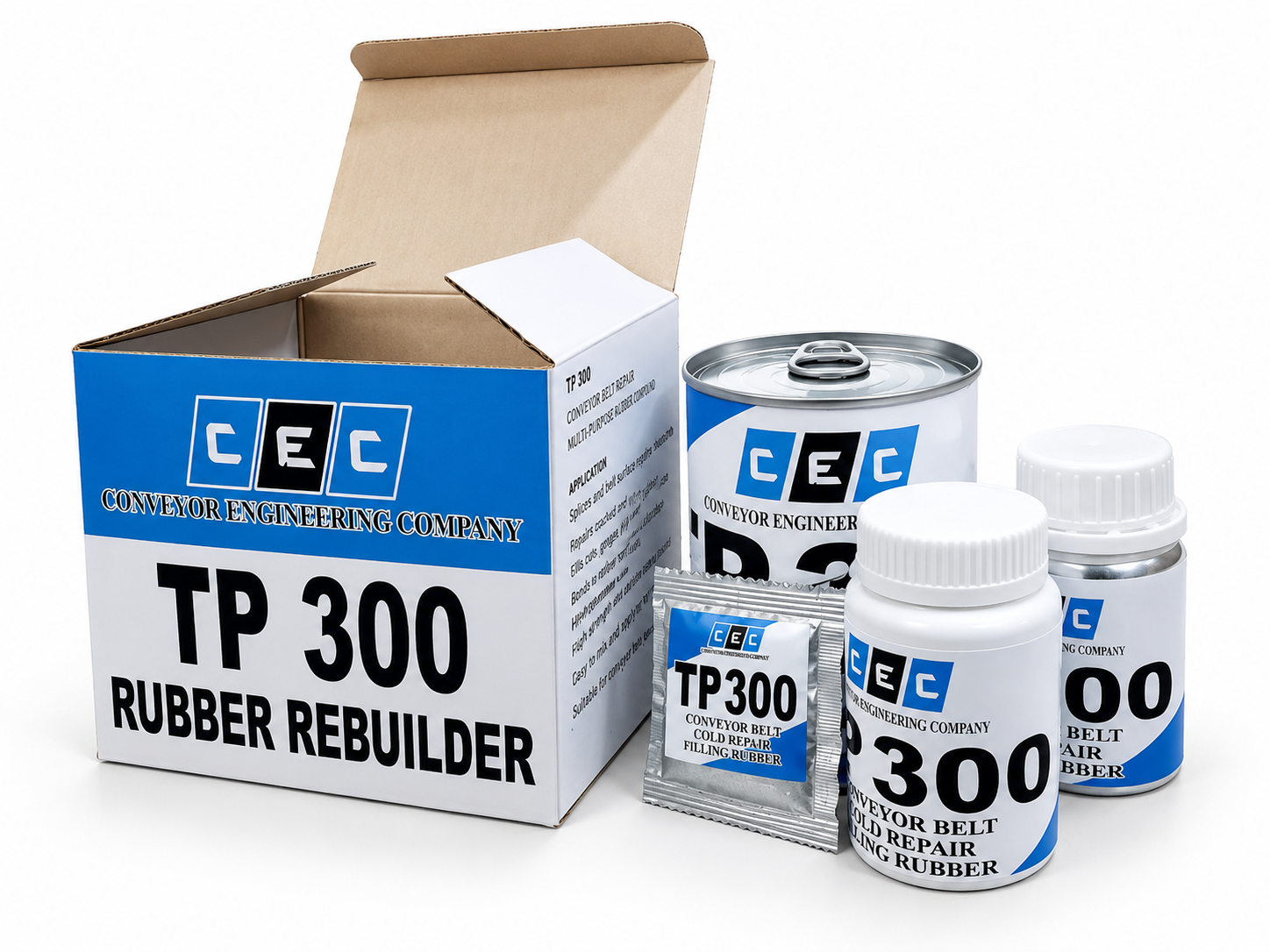
Rubber Rebuilder-TP300 is a rubber rebuilding product intended for compatible industrial maintenance and surface repair applications. Suitable use depends on the condition of the surface, preparation requirements and the manufacturer's recommended application procedure.
Designed for fast emergency and permanent repairs of long-distance conveyor belt scratches, longitudinal tears, edge wear, and cracks. Used with cold bonding cement and hardeners, these strips create a super-strong, seamless seal that saves downtime.
Restores damaged belt covers while retaining structural flexibility.
Quick-fix application that significantly reduces plant outages.
Built-in bonding layer ensures maximum adhesion to the belt surface.
| Type | Width (mm) | Length (mm) | Thickness (mm) |
|---|---|---|---|
| Without Fabric | 50 | 10,000 | 1.7 |
| 70 | 10,000 | 2.2 | |
| 100 | 10,000 | 2.2 | |
| 150 | 10,000 | 3.2 | |
| 220 | 10,000 | 3.2 | |
| 300 | 10,000 | 4.2 | |
| 400 | 10,000 | 4.2 | |
| With Fabric Reinforcement | 50 | 10,000 | 3.1 |
| 70 | 10,000 | 3.6 | |
| 100 | 10,000 | 3.6 | |
| 150 | 10,000 | 4.6 | |
| 220 | 10,000 | 4.6 | |
| 300 | 10,000 | 4.8 | |
| 400 | 10,000 | 4.8 |
Uncured Intermediate (Skim/Tie Gum) and Uncured Cover Rubber are designed specifically for hot vulcanized splicing and replacing damaged, cut, or worn belt covers. Formulated to bond with cured cover rubber across all standard grades of steel cord and fabric belting.
Primary bonding inter-layer (Tie Gum) for fabric ply and steel cord belt splices.
Re-topping worn top and bottom covers using hot press equipment.
| Thickness Options | Roll Width | Roll Weight |
|---|---|---|
| 0.8 mm | 500 mm | 10 kg |
| 1.0 mm | 500 mm | 10 kg |
| 2.0 mm | 500 mm | 10 kg |
| 3.0 mm | 500 mm | 10 kg |
| 4.0 mm | 500 mm | 10 kg |
| 5.0 mm | 500 mm | 10 kg |
| 6.0 mm | 500 mm | 10 kg |
GERMANBOND 2KR is a premium, non-flammable, two-component contact adhesive manufactured in Germany. Specially formulated for high-strength cold bonding of conveyor rubber belting, rubber linings, and pulley friction lagging, it delivers a permanent-elastic bond across various substrate materials.
Provides exceptionally high initial and final bond strength without thermal processing.
Ideal for bonding rubber, fabric, leather, polyurethane, and metallic surfaces.
Non-flammable formulation engineered for severe mechanical stress.
| Specification | Value |
|---|---|
| Base Compound | Polychloroprene (CR) |
| Solvent | Dichloromethane, Tetrachlorethylene |
| Color | Black |
| Density / Spissitude | Approx. 1.35 g/cm3 |
| Hardener | germanBond® RE |
| Cleaner / Diluent | germanBond® CLT Evolution |
| Application Tool | Brush or Spatula |
| Coverage Rate | Approx. 350 g/m2 per coat |
| Flash-off Time | Approx. 10 min (20°C) |
| Pot Life | Approx. 2 hours (20°C) |
| Hazard Designation | GHS 8 hazard, GHS 9 environment |
| Shelf Life | Minimum 12 months (Store in dry, cool conditions in tightly closed containers) |
Engineered for localized rubber layer damage repair. Available in standard and fabric-reinforced types, these patches restore belt cover integrity and achieve tensile strength equal to the original belt service life.
Ideal for punctures, localized gouges, and impact damage.
Restores cover protection to prevent moisture or fine material penetration into belt plies.
Standard rubber patches for surface wear, and fabric-reinforced patches for high-stress areas.
| Type | Dimensions (mm) | Thickness (mm) |
|---|---|---|
| Without Fabric | 160 × 130 | 2.4 |
| 260 × 200 | 2.4 | |
| 360 × 270 | 2.4 | |
| With Fabric Reinforcement | 160 × 130 | 3.8 |
| 260 × 200 | 3.8 | |
| 360 × 270 | 3.8 |
Belt Rebuilder TP-300
TP 300 is a fast-curing, four-component, 100% solid polyurethane elastomer conveyor belt repair system. Engineered for rapid emergency and routine field maintenance, TP 300 cures in just 15 minutes, restoring damaged belting quickly to minimize costly plant downtime.
Rapid chemical cure allows quick system restart and minimal downtime.
Simple four-component mix and fill process requiring no specialized skills.
Cold application method eliminates the need for bulky vulcanizing presses or complex heating tools.
Excellent adhesion and flexible elastomer performance across various belt types and damage profiles.