
Common Conveyor Belt Problems and Solutions
A structured diagnostic guide addressing conveyor belt mistracking, material carryback spillage, drive pulley slip, and vulcanized splice degradation in industrial plants.

A continuous belt conveyor is an interconnected mechanical system where an anomaly at one station quickly cascades into downtime elsewhere. From premature edge fraying caused by structural contact to fugitive dust emissions at transfer chutes, plant engineers must swiftly diagnose symptoms and implement lasting corrective actions. This technical brief details the four most frequent conveyor operating issues and their engineered remedies.
1. Conveyor Belt Mistracking and Edge Damage
Belt wander occurs when the belt drifts laterally toward one side of the conveyor stringer during operation. Left uncorrected, the belt edges rub against structural steelwork, causing severe carcass delamination and catastrophic failure.
Diagnostic procedure begins by observing whether the mistracking occurs consistently at a specific physical location on the conveyor frame or moves along with a particular section of the belt. If the wander happens at a fixed location, the idler frames or pulleys at that location are out of square. If the wander travels with the belt, an uneven or crooked vulcanized splice is the probable root cause.
- Verify structural alignment using precision laser squaring along both stringer rails.
- Install self-aligning training idlers at 30-meter intervals on return and carry runs.
- Adjust chute baffle plates to ensure material is deposited centrally onto the receiving belt.
2. Material Carryback and Spillage Along the Return Run
Material carryback occurs when damp, sticky, or fine particles adhere to the conveyor belt surface past the discharge pulley. As the belt transitions through the return run, this residue drops onto return idlers, building up eccentric rings that exacerbate mistracking and damage idler bearings.
Primary single-blade scrapers positioned at the 3 o’clock position on the head pulley remove up to 70% of material. A secondary tungsten-carbide or polyurethane cleaner mounted directly behind the head pulley removes fine moisture films, keeping return runs pristine.
Engineering Tip: Skirting Systems
In loading zones, replace rigid steel skirtboards with self-adjusting dual-lip polyurethane skirting systems backed by low-friction impact beds to eliminate spillage without grooving the belt cover.
3. Drive Pulley Slippage and Lagging Wear
When the drive pulley rotates faster than the conveyor belt, friction burns through the bottom cover fabric. Slippage is commonly triggered by reduced belt tension, worn pulley lagging, or rainwater ingress between the pulley and belt interface.
Inspection begins at the take-up unit. Gravity take-ups must have free vertical carriage movement without bind, while screw take-ups require regular adjustment to restore calculated operating tension.
- Inspect pulley lagging for smooth spots; replace worn rubber with diamond-grooved or ceramic lagging.
- Verify counterweight mass matches design tension for full-load cold startup conditions.
- Increase the angle of belt wrap around the drive pulley using a properly positioned snub pulley.
4. Splice Separation and Joint Fatigue
Splices endure cyclic tension, bending stresses over pulleys, and scraper impact. Premature failure often stems from improper rubber curing during vulcanization, moisture contamination during joint preparation, or mismatched pulley diameters below the belt’s minimum bend radius.
- Enforce standardized cleanroom preparation procedures for hot and cold vulcanized splices.
- Conduct regular non-destructive visual and ultrasonic inspections for joint edge lift or cord fatigue.
Key Engineering Takeaways
- Differentiate between fixed-location frame wander and traveling splice misalignment.
- Utilize dual-stage belt cleaners to prevent carryback accumulation on return rolls.
- Upgrade smooth pulley shells to grooved rubber or ceramic lagging to eliminate slippage.
- Ensure take-up counterweights travel freely and maintain calculated minimum design tension.
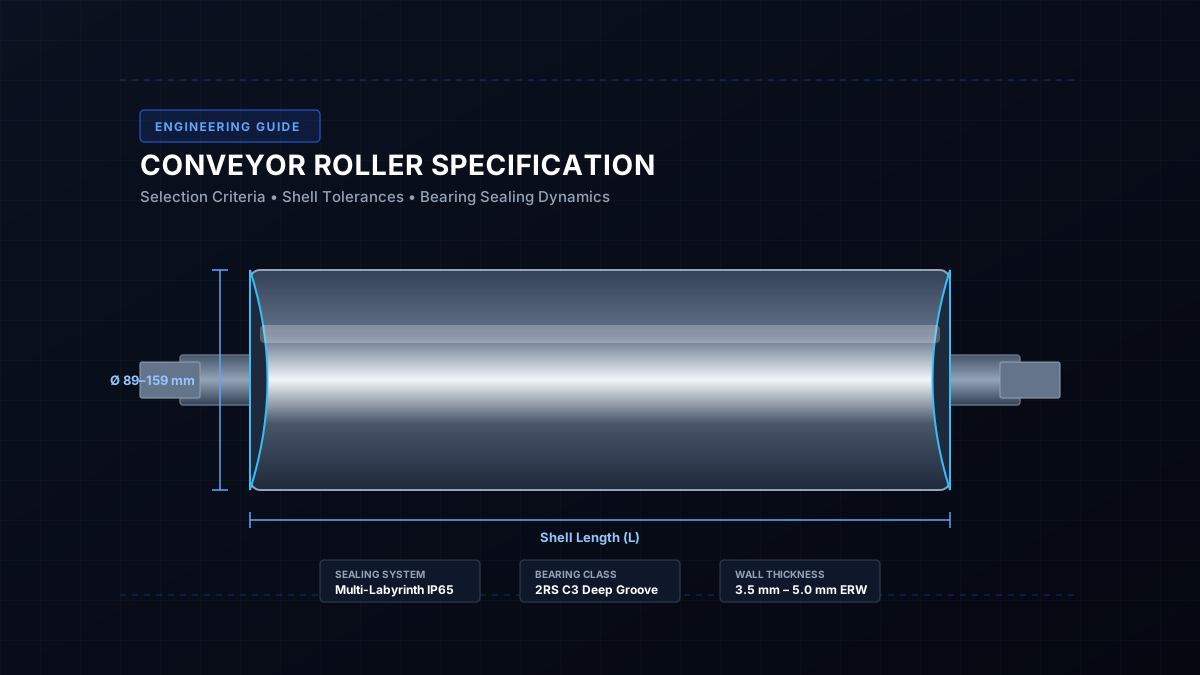
How to Choose the Right Conveyor Rollers
A practical engineering guide to selecting heavy-duty conveyor rollers based on material lump size, belt velocity, dynamic load capacity, shell wall thickness, and multi-stage bearing seal protection.
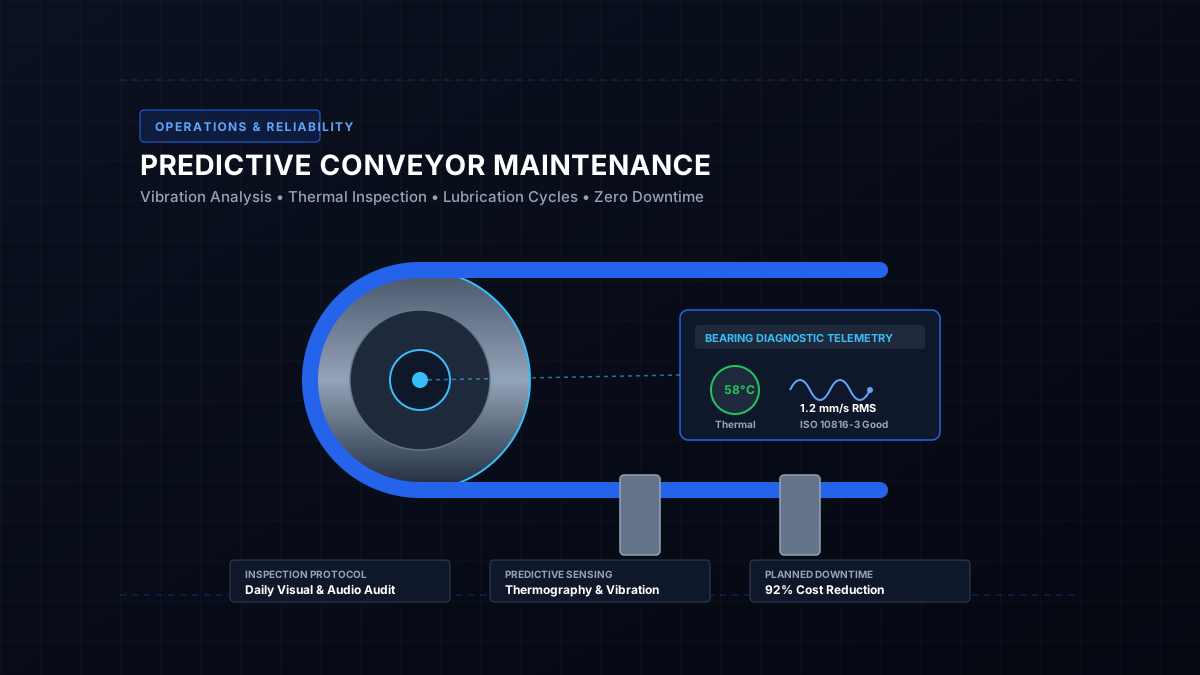
Why Conveyor Maintenance Matters
An analysis of preventive versus reactive conveyor maintenance programs, detailing inspection schedules, thermal imaging, vibration telemetry, and ROI benefits.