
Why Conveyor Maintenance Matters
An analysis of preventive versus reactive conveyor maintenance programs, detailing inspection schedules, thermal imaging, vibration telemetry, and ROI benefits.
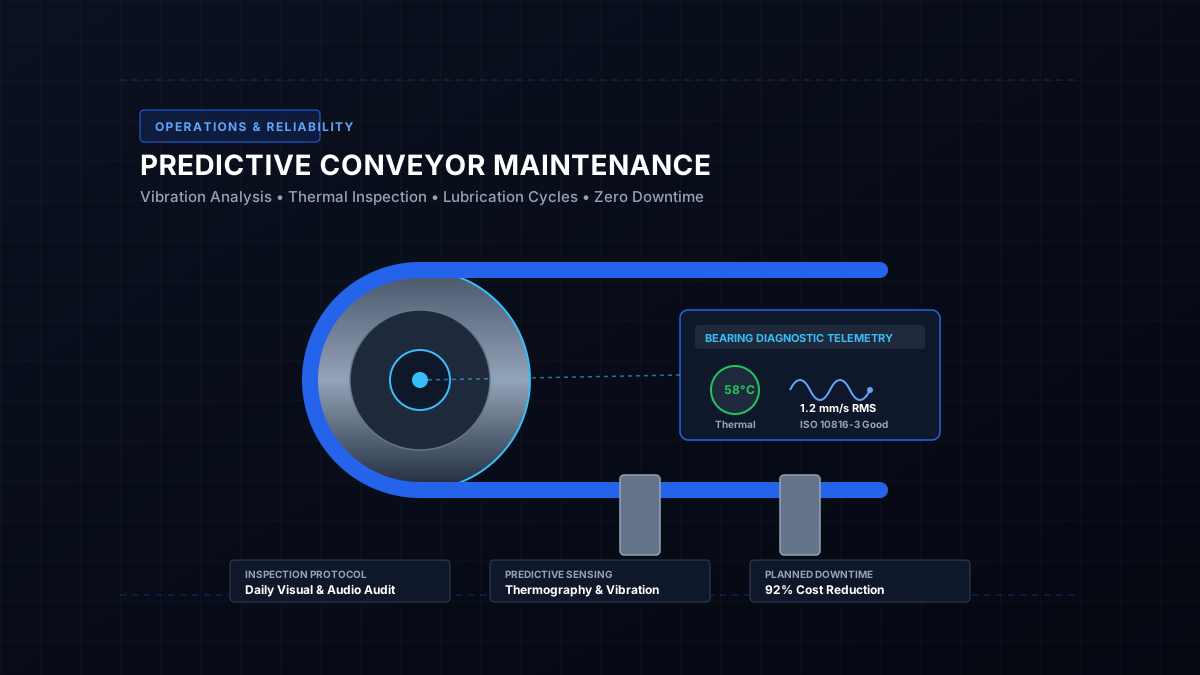
In continuous industrial operations—including cement plants, thermal power stations, bulk export terminals, and grain silos—the conveyor system serves as the central lifeline of production. When a conveyor stops unexpectedly, processing kilns, ship loaders, and assembly lines immediately grind to a halt. Transitioning from reactive firefighting to a disciplined predictive maintenance strategy delivers measurable safety, financial, and operational dividends.
1. The True Economics of Unplanned Downtime
The financial impact of a conveyor breakdown extends far beyond the direct cost of replacement parts. When a main overland conveyor halts unexpectedly, the true cost includes idle labor, process bottlenecks, penalty fees for delayed vessel loading, and elevated safety risks during rushed repairs.
Industry studies consistently demonstrate that proactive condition monitoring and planned component changeouts cost between 60% and 75% less than emergency replacements following an in-service failure.
- Eliminate secondary collateral damage caused by seized rollers cutting through belts.
- Minimize costly emergency freight expediting fees for heavy mechanical components.
- Allow maintenance teams to plan component replacements during scheduled plant shutdowns.
2. The Three-Tiered Inspection Hierarchy
A robust maintenance program divides inspection tasks into structured time intervals with clear mechanical checklists.
Daily walk-through inspections focus on sensory cues: abnormal squeaking from frozen idler bearings, visual evidence of belt wander, smell of friction burn, or material buildup under pulleys. Weekly tasks include checking scraper blade pressure, verifying emergency pull-cord switch continuity, and inspecting skirtboard rubber seals. Monthly audits include measuring take-up carriage travel and checking gearbox lubricant quality.
Maintenance Standard
Never permit a seized roller to remain on a running conveyor. A seized steel roller acts as an abrasive lathe against the belt bottom cover, generating localized friction heat that can ignite flammable coal dust or ruin the belt carcass within hours.
3. Predictive Technologies: Thermography and Vibration
Modern industrial plants augment visual audits with non-invasive predictive technologies. Handheld infrared thermography cameras allow technicians to scan thousands of idler bearings and pillow blocks in minutes, identifying elevated temperatures that indicate grease degradation or mechanical bind long before audible noise begins.
Similarly, triaxial vibration telemetry on drive gearboxes and primary head pulley bearings detects bearing spalling, unbalance, and angular misalignment with millimeter-per-second precision.
- Deploy thermal imaging scans on return idler rolls during full-load operating conditions.
- Establish baseline ISO 10816-3 vibration velocity thresholds for drive motor and reducer bearings.
- Utilize automated ultrasonic thickness gauges to monitor pulley shell and belt carcass wear rates.
Key Engineering Takeaways
- Predictive maintenance costs significantly less than reactive emergency plant repairs.
- Enforce immediate replacement protocols for any seized or noisy idler roll.
- Incorporate thermal imaging scans to spot failing bearings prior to catastrophic seizure.
- Log take-up travel and belt stretch over time to anticipate splice and tensioning requirements.
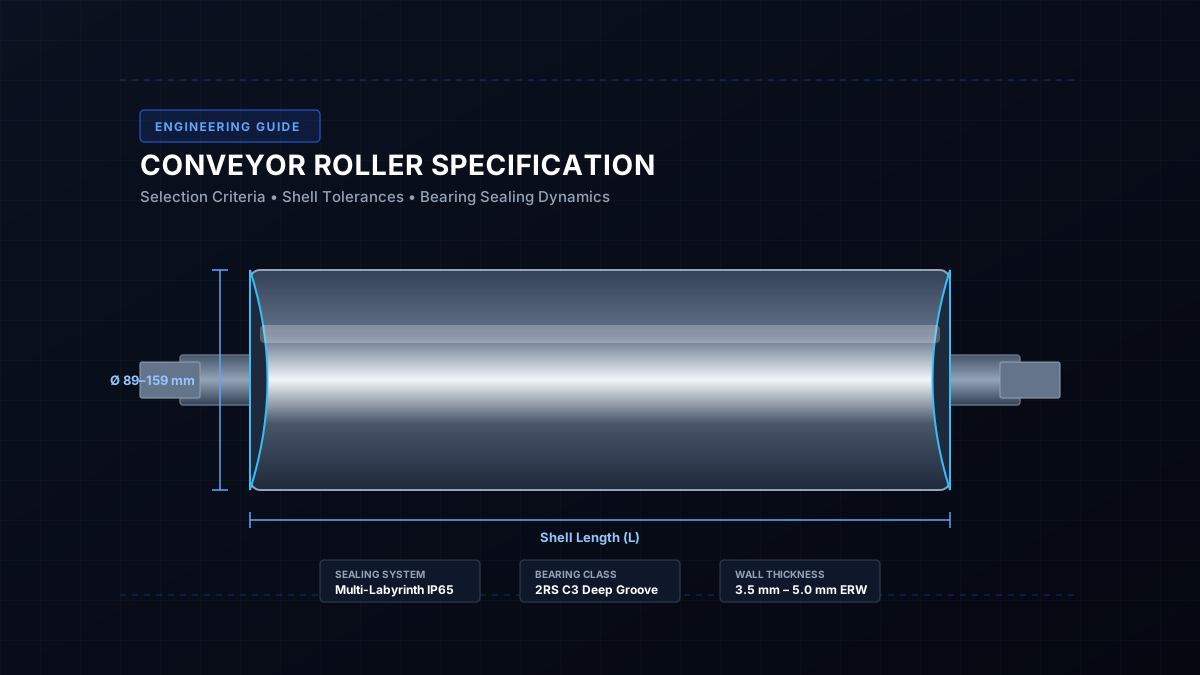
How to Choose the Right Conveyor Rollers
A practical engineering guide to selecting heavy-duty conveyor rollers based on material lump size, belt velocity, dynamic load capacity, shell wall thickness, and multi-stage bearing seal protection.

Common Conveyor Belt Problems and Solutions
A structured diagnostic guide addressing conveyor belt mistracking, material carryback spillage, drive pulley slip, and vulcanized splice degradation in industrial plants.