
How to Choose the Right Conveyor Rollers
A practical engineering guide to selecting heavy-duty conveyor rollers based on material lump size, belt velocity, dynamic load capacity, shell wall thickness, and multi-stage bearing seal protection.
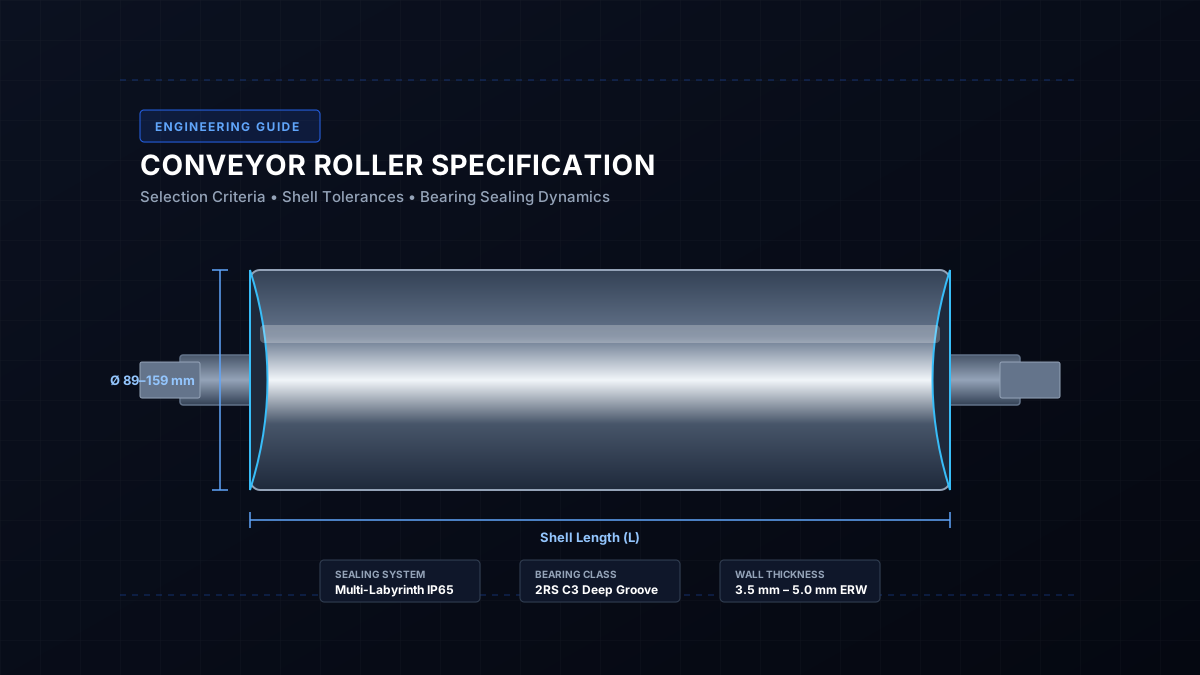
Conveyor rollers (idlers) represent the fundamental mechanical foundation of any belt conveyor system. In heavy-duty bulk handling operations—such as mining, cement manufacturing, and power generation—thousands of idler rolls support miles of loaded belt continuously. Selecting the incorrect roller specification causes premature bearing seizure, accelerated shell wear, belt mistracking, and elevated motor power demand. This guide outlines the key engineering criteria required to specify rollers that deliver dependable service life.
1. Dynamic Load Capacity and Roller Diameter
The first design parameter is determining the dynamic radial load each roller will experience under maximum operating capacity. This load comprises the combined weight of the conveyor belting and the transported material volume over the idler spacing pitch.
Roller diameter directly dictates rotational speed (RPM) for a given belt velocity. Larger shell diameters (e.g., 127 mm or 152 mm versus 89 mm) rotate at significantly lower RPMs, reducing bearing cycle fatigue and minimizing frictional heat generation. For high-speed overland conveyors operating above 3.0 m/s, larger roller diameters are essential for extended bearing lifespan.
- Calculate maximum lump size impact forces at loading zones to avoid shell denting.
- Standardize idler diameters across conveyor sections to simplify spare parts inventory.
- Verify shaft deflection under peak load remains within 10 to 12 minutes of arc at the bearing centers.
2. Bearing Selection and Multi-Stage Sealing
Over 80% of conveyor roller failures stem from contamination ingress rather than mechanical fatigue. The bearing configuration and sealing architecture represent the heart of roller reliability.
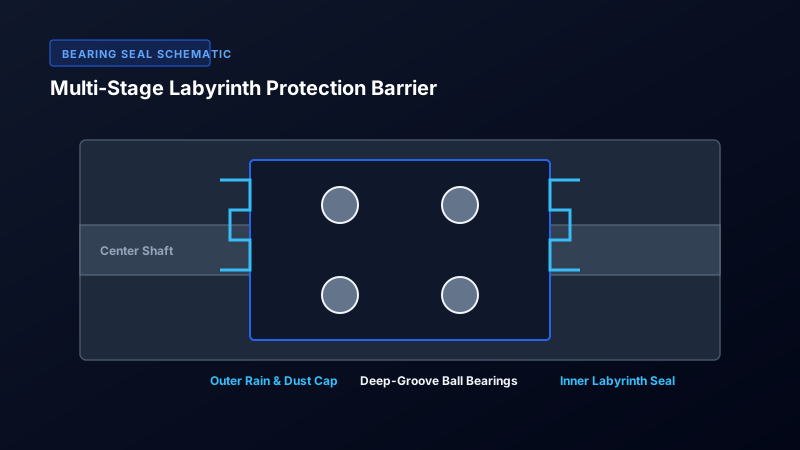
Quality industrial rollers utilize precision deep-groove ball bearings (such as 6204, 6205, or 6306 series) with internal C3 clearance to accommodate thermal shaft expansion. For severe environments, contact seals alone are insufficient because friction causes seal degradation. A non-contact, multi-stage labyrinth seal packed with water-resistant lithium-complex grease forms a tortuous path that effectively repels dust and moisture.
Engineering Tip: Seal Protection
In washdown environments or high-dust handling (cement clinker, pulverized coal), ensure rollers feature an external protective stone-guard and rain cap to deflect coarse debris before it reaches the labyrinth seal.
3. Shell Thickness and Tube Concentricity (TIR)
Roller shells should be manufactured from precision electric resistance welded (ERW) steel tubing meeting strict wall thickness standards (typically 3.5 mm to 5.0 mm). Thin-walled tubes risk rapid wear when handling abrasive materials or in return idler positions subject to carryback friction.
Total Indicated Runout (TIR) measures roller concentricity. High TIR values generate vibration harmonics, accelerate bearing wear, and induce belt flutter at high speeds. Precision manufacturing requires welded end-housings machined concurrently to maintain concentricity within ISO / CEMA tolerance limits.
- Specify minimum 3.8 mm to 4.5 mm shell thickness for abrasive ore and aggregate conveyors.
- Inspect end-disc welding for continuous penetration without cold-lap defects.
- Select polyurethane or vulcanized rubber-disc lagging for sticky or acidic bulk materials.
4. Environmental and Operational Conditions
Operating ambient temperature and chemical exposure determine lubricating grease and coating specifications. Standard lithium greases perform reliably between -10°C and 80°C. For extreme low-temperature winter mining or high-temperature clinker discharge applications, synthetic greases are required.
Corrosion resistance can be enhanced through heavy-duty polyurethane exterior sleeves, stainless steel construction, or multi-coat epoxy primer coatings to resist chemical attack in fertilizer and coastal harbor terminals.
Key Engineering Takeaways
- Match roller diameter to belt speed to keep bearing RPM within safe design envelopes.
- Prioritize multi-stage labyrinth seals with certified IP65+ ingress protection.
- Specify heavy wall thicknesses (>= 3.8 mm) in loading zones and return sections.
- Maintain strict concentricity standards to reduce belt vibration and energy consumption.

Common Conveyor Belt Problems and Solutions
A structured diagnostic guide addressing conveyor belt mistracking, material carryback spillage, drive pulley slip, and vulcanized splice degradation in industrial plants.
Why Conveyor Maintenance Matters
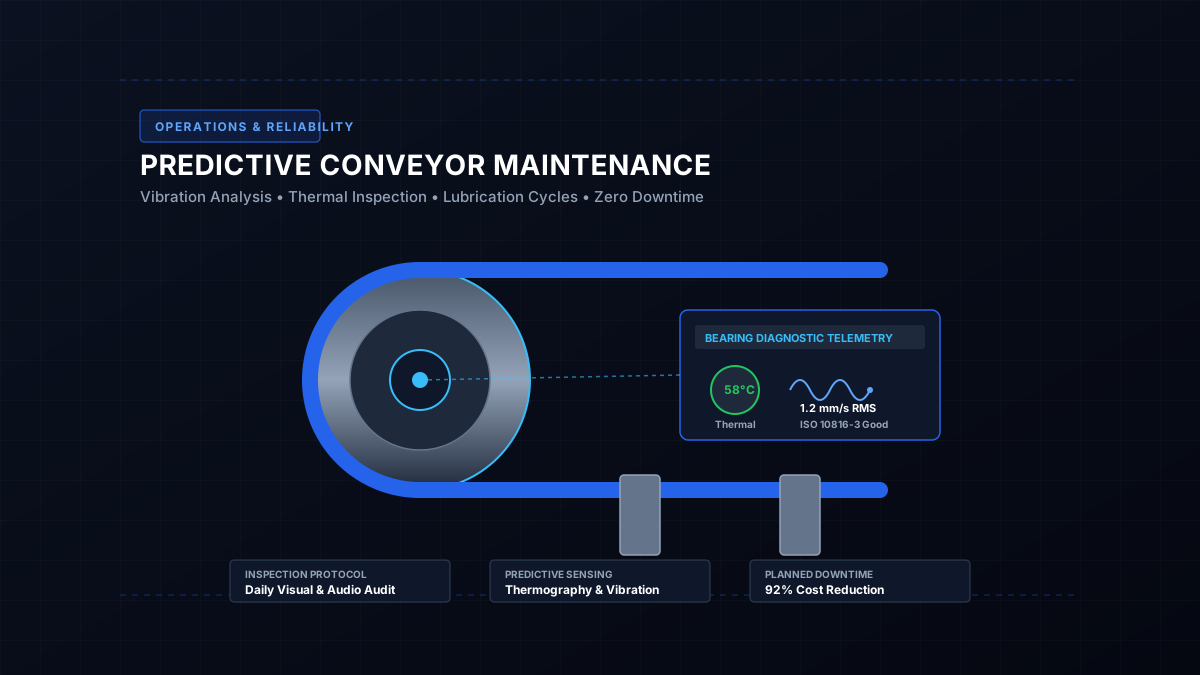
An analysis of preventive versus reactive conveyor maintenance programs, detailing inspection schedules, thermal imaging, vibration telemetry, and ROI benefits.